Gemstone Library
White Sapphire
Quick Answer
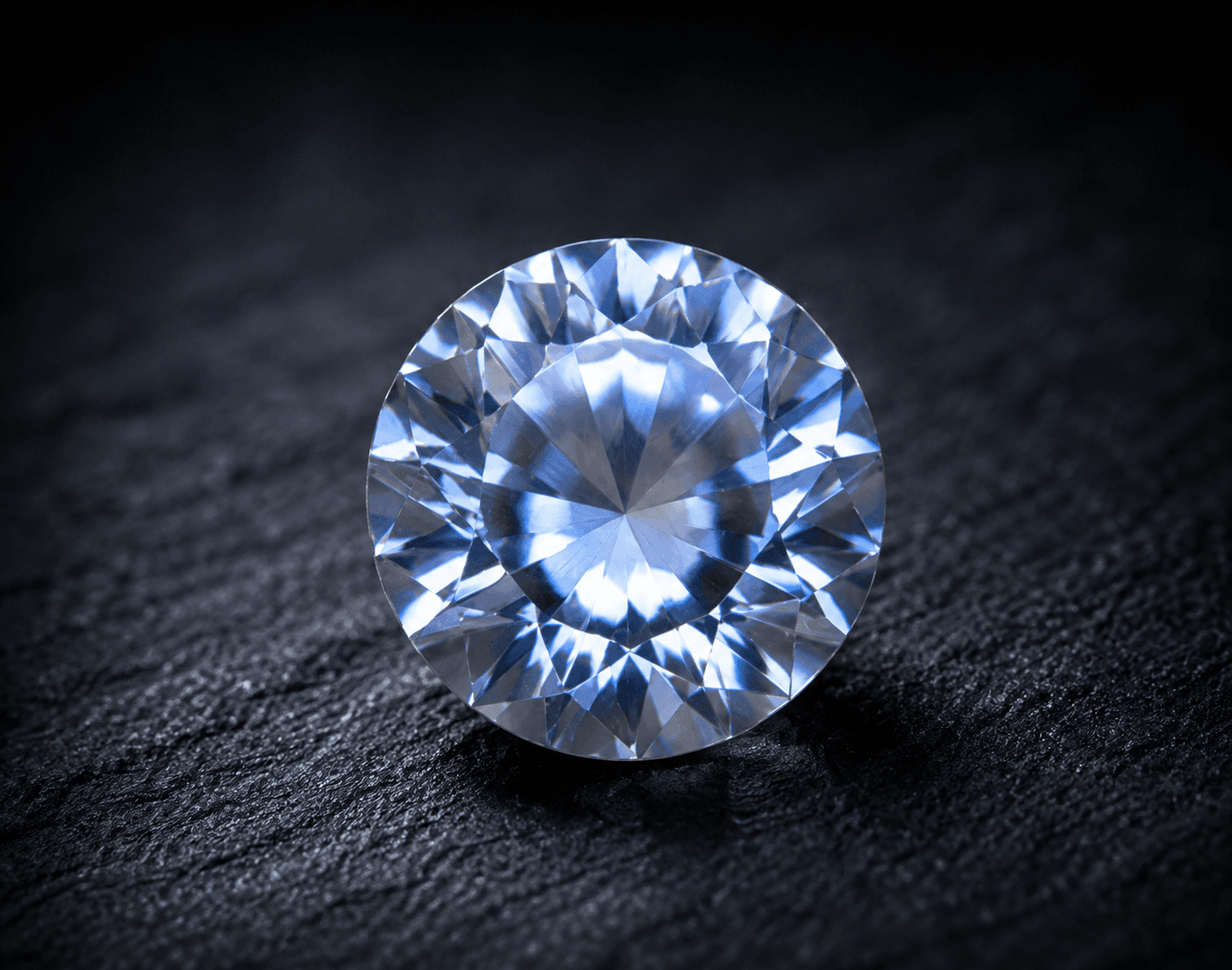
White sapphire is the colourless variety of corundum — durable (Mohs 9), brilliant, and the closest natural alternative to diamond at a fraction of the price. Sri Lanka is the world's benchmark source, producing bright, glassy stones with high transparency in a wide range of sizes. In Vedic astrology, white sapphire is a widely-accepted substitute for diamond (Heera) — the primary gemstone of Venus (Shukra), governing love, beauty, and artistic pursuits. Popular for engagement rings, everyday jewellery, and as an affordable Vedic Venus gem.
Corundum
Mineral
9 / 10
Hardness
Heera sub.
Vedic Role
Sri Lanka
Top Origin
Contents
What Is White Sapphire?
A white sapphire is the colourless variety of corundum — the same mineral species that produces blue sapphire, ruby, and every other fancy sapphire colour. Where coloured sapphires owe their hues to trace elements (titanium and iron for blue, chromium for red, iron alone for yellow), white sapphire contains virtually no colour-causing impurities. The result is a transparent, brilliant, colourless gemstone that shares corundum's exceptional durability and its long history as one of Sri Lanka's most-traded gemstones.
White sapphire has been overshadowed for centuries by diamond in Western markets, but its combination of Mohs 9 hardness, natural origin, ethical mining pathway, and accessible price point has made it one of the most popular colourless gemstones for modern engagement rings and everyday jewellery. In the Vedic astrological market, white sapphire has an equally important role as a substitute for diamond (Heera) — the primary gemstone of Venus.
White Sapphire vs Diamond — Key Differences
White sapphire is often marketed as a “diamond alternative”, and understanding the differences helps set realistic expectations:
- Optical character. Diamond has a refractive index of 2.42 and high dispersion, producing intense “fire” (rainbow flashes) and sharp brilliance. White sapphire has a refractive index of ~1.77 and lower dispersion — its brilliance is bright but softer and more glassy, without diamond's rainbow sparkle.
- Hardness. Diamond Mohs 10; white sapphire Mohs 9. Both are extremely durable for jewellery use.
- Appearance over time. White sapphire shows accumulated oils and residues more visibly than diamond, so it appears to “dull” between cleanings — the fix is simple regular cleaning.
- Price. A fine 1-carat white sapphire typically costs 5–15% of an equivalent diamond.
- Origin. Ceylon white sapphires come from small-scale artisanal mining with limited environmental impact.
- Symbolism. Diamond's cultural role as “the” engagement stone is well-established; white sapphire is increasingly recognised as a legitimate and distinctive alternative.
Heera Substitute — Vedic Venus Gemstone
In Vedic astrology, diamond — Heera in Sanskrit — is the primary gemstone of Venus (Shukra) and one of the nine Navaratna. Venus governs:
- Love, romance, and marital happiness.
- Beauty, luxury, and material comfort.
- Artistic pursuits, music, poetry, and dance.
- Female energies and the wife or partner.
- Refinement, elegance, and social grace.
Because natural diamonds of astrological quality (unincluded, colourless, minimum 1 carat, untreated) are prohibitively expensive for most buyers, tradition recognises several uparatna — substitute gemstones — for Heera. White sapphire is among the most widely accepted substitutes, along with white topaz, white zircon, and white beryl. Of these, white sapphire is generally preferred because of its superior hardness, natural rarity, and durability.
A properly-consecrated white sapphire worn as a Heera substitute is believed to strengthen Venus in the wearer's horoscope, attract love and marital harmony, enhance artistic sensibilities, and channel Shukra's beneficial influence.
Requirements for astrological white sapphire (Heera substitute):
- Natural corundum, laboratory-confirmed.
- Colourless — no visible yellow, brown, or grey tint.
- Eye-clean clarity.
- Minimum weight typically 1 carat; 2–5 carats widely preferred.
- Set in white gold, silver, or platinum — not yellow gold.
- Worn on the middle finger of the right hand after consecration.
Ceylon White Sapphires
Sri Lanka has produced white sapphires for over two millennia, from the same alluvial gem gravels that yield the island's celebrated blue, yellow, and pink sapphires. Ceylon material is characterised by:
- High transparency. Ceylon whites are typically clean and highly transparent.
- Bright, glassy brilliance. Well-cut Ceylon whites show excellent light return.
- Wide size range. Available in commercially useful sizes from under 1 carat to well above 10 carats.
- Consistent supply. Ceylon is one of the few sources producing white sapphires in commercial quantities year-round.
- Historical prestige. Ceylon origin adds modest but meaningful market premium.
Quality Factors
Colour (Absence of Colour)
The ideal white sapphire is completely colourless. Subtle yellow, brown, or grey tints reduce value — the closer to true colourless, the better. Similar to diamond grading, colourless white sapphires command significantly more than tinted stones.
Clarity
Eye-clean stones are strongly preferred. Because there is no body colour to distract from inclusions, clarity is more visually important in white sapphire than in coloured sapphires. Silk and healed fractures are common; surface-reaching fractures always reduce value.
Cut
Cut is particularly important for white sapphire because it directly affects brilliance. Round brilliants, cushions, ovals, and emerald cuts all work well. Precision cutting maximises light return and reduces the visibility of inclusions.
Carat Weight
White sapphires are relatively available across the size spectrum. Stones from 0.5 carats through 5 carats are the mainstream market; above 5 carats with fine colour and clarity commands premiums.
Treatments
Most commercial white sapphires are heat-treated to improve colour (removing subtle tints) and clarity (dissolving silk). Heat treatment is stable, permanent, and universally accepted. Unheated white sapphires exist but the premium is small — the difficulty of finding fine colour without heat is less severe for white than for coloured sapphires. Diffusion and radiation treatments are essentially not used on white sapphire.
Price & Value
- 0.5–1 carat commercial: US$50–200 per carat.
- 1 carat fine Ceylon: US$150–400 per carat.
- 2–3 carats fine Ceylon: US$300–800 per carat.
- 5+ carats fine Ceylon: US$800–2,500 per carat.
- Compare to diamond: A fine 1-carat diamond of equivalent visual quality typically costs US$3,000–8,000+ per carat — 10–20× the white sapphire price.
Engagement Ring Guide
White sapphire is one of the most popular engagement ring alternatives to diamond. Considerations:
- Cut for maximum brilliance. Round brilliant, cushion, or oval cuts return the most light. Emerald cuts show off clarity but return less light.
- Setting. Prong settings maximise light entry; bezel settings protect the stone edges.
- Metal choice. White gold and platinum enhance the colourless appearance; yellow or rose gold can reflect a warm tint into the stone.
- Size for money. The same budget affords a much larger centre stone in white sapphire than diamond.
- Cleaning routine. Set expectations for monthly cleaning to maintain brilliance.
- Ethical origin. Ceylon white sapphires come from artisanal, small-scale mining with minimal environmental impact.
Jewellery Guide
- Engagement rings. Popular and increasingly recognised as a distinctive, ethical alternative to diamond.
- Everyday jewellery. Studs, pendants, and tennis bracelets — white sapphire is a durable, affordable choice for accents and larger statement pieces.
- Astrological Heera substitute. White gold, silver, or platinum setting, minimum 1 carat, worn on the middle finger of the right hand after consecration.
- Accent stones. Small white sapphires make excellent side stones and pavé accents around coloured centre stones, offering diamond-like sparkle at fraction of the price.
Care & Maintenance
- Regular cleaning is essential. Warm soapy water and a soft brush monthly maintains brilliance. Neglected white sapphires can appear noticeably cloudy compared to well-maintained stones.
- Ultrasonic and steam cleaning. Generally safe for white sapphires without visible fractures.
- Storage. Store separately from diamonds; corundum can be scratched only by diamond.
- Wearing. Mohs 9 makes white sapphire suitable for daily wear including rings. Remove during heavy manual work.
- Setting inspection. Annual inspection recommended for prong settings.
Frequently Asked Questions
What is a white sapphire?
How does white sapphire compare to diamond?
Why choose white sapphire over diamond?
Is white sapphire a good engagement ring stone?
Are white sapphires treated?
What is the astrological role of white sapphire?
Where do white sapphires come from?
What sizes and prices should I expect?
What size Heera-substitute white sapphire is recommended?
How do I distinguish white sapphire from other colourless gems?
How do I care for a white sapphire?
Do white sapphires lose sparkle over time?
Interested in a Ceylon white sapphire?
Tell us what you're looking for — size, clarity, use case (engagement, everyday, astrological), budget — and we'll respond with suitable options from our current inventory.
Make an Enquiry